
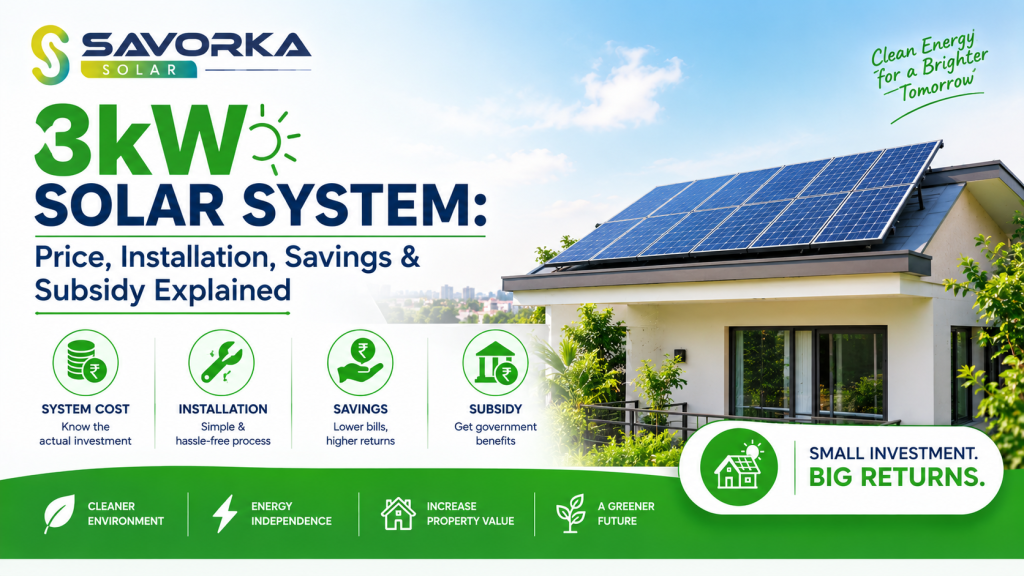

A properly designed 3kW system can generate a significant amount of electricity during the day and reduce your monthly power bills. For eligible residential consumers, the government solar subsidy under PM Surya Ghar: Muft Bijli Yojana can also reduce the effective installation cost.
But how much does a 3kW solar system cost? What is the installation process? How much can you save? Here is what homeowners should know before making a decision.
What Is a 3kW Solar System?
A 3kW solar system is a rooftop solar power system with a total installed capacity of 3 kilowatts. It generally includes:
- Solar PV modules
- Solar inverter
- Mounting structure
- DC and AC cables
- Protection and earthing equipment
- Monitoring system
- Installation and commissioning
The exact equipment and configuration depend on your roof, electricity consumption, available sunlight and the system design.
For a typical home, a 3kW rooftop solar system can be suitable for households with moderate electricity consumption. The right capacity, however, should be determined after reviewing your recent electricity bills and conducting a site assessment.
3kW Solar System Price and Cost in India
The 3kW solar system price is not fixed because it depends on the type and quality of panels, inverter technology, mounting structure, installation requirements and other components.
A quotation may include:
- Solar panels
- Inverter
- Mounting structure
- Electrical and safety components
- Installation and commissioning
- Net-metering-related assistance, where applicable
Therefore, homeowners should compare complete system quotations rather than choosing an installer based only on the lowest upfront price.
The 3kW solar system cost can also vary depending on whether the roof requires additional structural work, longer cable runs or other site-specific requirements.
3kW Solar Subsidy: How Much Can You Get?
Under PM Surya Ghar: Muft Bijli Yojana, eligible residential consumers can receive Central Financial Assistance (CFA) based on installed rooftop solar capacity.
The current central subsidy structure provides:
| Solar Capacity | Central Subsidy |
|---|---|
| First 1 kW | ₹30,000 |
| Second 1 kW | ₹30,000 |
| Third 1 kW | ₹18,000 |
| 3kW system | Up to ₹78,000 |
For capacity above 3kW, the central subsidy remains capped at ₹78,000.
Eligibility, installation through the applicable process, DISCOM verification and other scheme conditions apply. Homeowners should check the latest government guidelines before planning their installation.
You can check the official [PM Surya Ghar portal] for the application process and scheme information.
How Much Electricity Can a 3kW Solar System Generate?
Actual generation depends on factors such as:
- Location and solar irradiation
- Roof orientation and tilt
- Shade from trees or nearby buildings
- Panel efficiency
- Weather conditions
- System design and maintenance
A 3kW system can generate several units of electricity per day under suitable conditions, but generation will vary throughout the year. Summer months may produce more electricity, while cloudy or rainy periods can reduce output.
This is why a professional site assessment is important before finalising the system size.
How Much Can You Save With a 3kW Solar System?
Your savings depend primarily on how much electricity the system generates and how much of that electricity your household consumes.
For example, using solar power during the daytime can reduce the amount of electricity you need to purchase from the grid. If excess generation is exported through an applicable net-metering arrangement, it may also be adjusted according to the rules of your local DISCOM.
Your actual savings will depend on:
- Monthly electricity consumption
- Electricity tariff
- Solar generation
- Daytime electricity usage
- Net-metering provisions
- System performance
Instead of promising a fixed monthly saving, a reliable solar installer should estimate savings using your actual electricity bills and site conditions.
3kW Solar System Installation Process
The installation process generally involves the following steps:
Electricity Bill Assessment
Your recent electricity bills are reviewed to understand consumption patterns and determine whether 3kW is appropriate.
Rooftop Site Survey
The installer checks roof area, sunlight exposure, shading, structural conditions and the best location for the panels.
System Design
The solar system is designed based on your roof and electricity requirements. Panel layout, inverter capacity and electrical connections are finalised.
Installation
Solar panels are mounted on a suitable structure, followed by inverter installation, wiring, earthing and required safety equipment.
Testing and Commissioning
The system is tested to ensure that the panels, inverter and electrical connections are functioning correctly.
Net Metering and Verification
Where applicable, the required DISCOM process for grid connection and net metering is completed according to local regulations.
Is a 3kW Solar System Right for Your Home?
A 3kW system can be a good option if your home has:
- Moderate monthly electricity consumption
- Sufficient shadow-free rooftop space
- A suitable roof structure
- Regular daytime electricity usage
- A long-term goal of reducing electricity expenses
However, system size should not be selected only because 3kW qualifies for the maximum central subsidy. Your consumption and roof conditions should come first.
Choose the Right Solar Installation Partner
The quality of installation can have a direct impact on long-term system performance. Before choosing a solar company, check the quality of panels and inverter, mounting structure, warranties, installation standards, after-sales support and assistance with applicable approvals.
Savorka Solar’s residential solar solutions can help homeowners plan and install rooftop solar based on their electricity requirements and site conditions.
For official information on the subsidy and application process, homeowners should also refer to the MNRE rooftop solar programme and the PM Surya Ghar portal.
Get Your 3kW Solar System Planned Professionally
A 3kW solar system can help homeowners reduce grid electricity consumption while making better use of available rooftop space. With the available solar subsidy, the upfront investment can also become more manageable for eligible households.
Before installation, compare the complete system cost, expected generation, savings, equipment quality and after-sales support. A proper site assessment will help ensure that the system is designed for your actual requirements.