

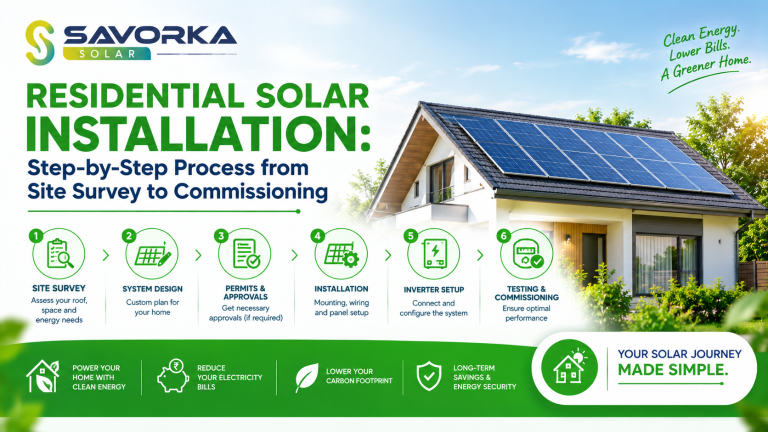


Understanding the Role of a Solar EPC Company
A Solar EPC (Engineering, Procurement, and Construction) company is responsible for managing the complete lifecycle of a solar project, from initial assessment to final commissioning. Their scope of work typically includes site inspection, customized system planning, sourcing of panels and inverters, installation, net metering assistance, and long-term maintenance support. An experienced EPC partner ensures your system is designed and executed for reliable performance, operational safety, and maximum energy efficiency over its full lifespan.
1. Assess the Company’s Industry Experience and Project Portfolio
Key areas to evaluate:
- Years of experience in the solar industry
- Total installed project capacity
- Diversity of completed projects
- Expertise across residential, commercial, and industrial segments
- Client portfolio and case studies
In the solar sector, experience plays a vital role in ensuring technical precision and project reliability. Companies with a proven track record are generally better equipped to manage complex installations, regulatory processes, and execution challenges.
2. Evaluate the Quality of Solar Components
Industry-standard warranty benchmarks to look for:
- Solar modules: up to 25 years performance warranty
- Inverters: typically 5–10 years
- Installation / workmanship: 1–5 years
The quality of components used directly impacts the performance, durability, and long-term returns of a solar power system. Since solar installations are designed to operate for decades, component selection should be approached with careful consideration.
3. Verify Certifications and Compliance Standards
Certifications and compliances to review:
- MNRE-related approvals or registrations
- ISO certifications
- BIS-certified products
- Electrical and safety compliance standards
A credible Solar EPC company should operate in accordance with recognized quality, safety, and regulatory standards. For commercial and industrial installations, compliance becomes even more critical due to operational and business continuity requirements.
4. Review Engineering and Design Capabilities
A well-qualified EPC partner should:
- Conduct detailed site feasibility assessments
- Analyze shadow-free zones and structural suitability
- Design optimized system layouts
- Provide accurate generation and savings estimates
Every site has unique structural and energy requirements. A professional EPC company should offer customized engineering solutions rather than a standardized, one-size-fits-all approach. Robust system design directly influences energy generation output, return on investment, payback period, and system lifespan.
5. Evaluate Installation Standards and After-Sales Support
Before finalizing a company, evaluate:
- Availability of AMC (Annual Maintenance Contracts)
- Monitoring and remote diagnostics capabilities
- Response timelines for technical support
- On-site service availability
While installation quality is essential, long-term support and service capabilities are equally important in ensuring uninterrupted system performance. Timely issue resolution minimizes downtime and protects overall system productivity.
6. Compare Pricing with Complete Transparency
Request a detailed proposal including:
- Equipment specifications and brands
- Complete scope of installation
- Warranty coverage
- Taxes and applicable subsidies
- Maintenance and support costs
Pricing should always be evaluated alongside quality, warranties, and long-term performance expectations. In some cases, lower quotations may exclude important project elements such as net metering support, structural modifications, or additional installation costs. A slightly higher upfront investment often results in stronger long-term financial and operational benefits.
7. Review Customer Feedback and Market Reputation
Sources to review:
- Google reviews and ratings
- Client testimonials on the company website
- Social media presence and engagement
- Completed project showcases and case studies
Client testimonials and market reputation provide valuable insights into a company’s professionalism, execution quality, and service standards. Where possible, interacting directly with existing customers can offer practical insight into actual energy savings achieved and overall service experience.
Subsidy and Net Metering Assistance
An efficient Solar EPC company should also provide support with government subsidy applications, net metering approvals, and DISCOM coordination. This assistance simplifies the installation process and helps ensure faster project execution, particularly for residential rooftop solar projects under the PM Surya Ghar Yojana.
Common Mistakes to Avoid
Watch out for these pitfalls when choosing a solar EPC partner:
- Selecting solely on the basis of low pricing — lower costs may indicate compromises in quality or support
- Ignoring post-installation support — reliable after-sales service is essential for long-term performance
- Overlooking project experience — always verify relevant project history at a similar scale
- Not reviewing warranty terms carefully — comprehensive warranties indicate confidence in the product and installation
Final Thoughts
Selecting the right Solar EPC company in India is a strategic decision that directly influences the efficiency, reliability, and financial performance of your solar power system. As India continues progressing toward a more sustainable energy future, partnering with the right solar company today can deliver measurable economic and environmental benefits for decades to come.
Why Choose Savorka Solar?
At Savorka Solar, we bring together technical expertise, quality components, transparent pricing, and end-to-end support to deliver solar solutions that truly perform. Whether you’re a homeowner looking to reduce electricity bills or a business planning a large-scale installation, our team guides you every step of the way — from design and installation to subsidies and long-term maintenance.