
With government support through schemes such as PM Surya Ghar: Muft Bijli Yojana, residential rooftop solar has also become more accessible to homeowners across India.
But before installing a system, it is important to understand how rooftop solar works, what system size you need, how much it costs and what to expect from the installation process.
What Is Rooftop Solar for Home?
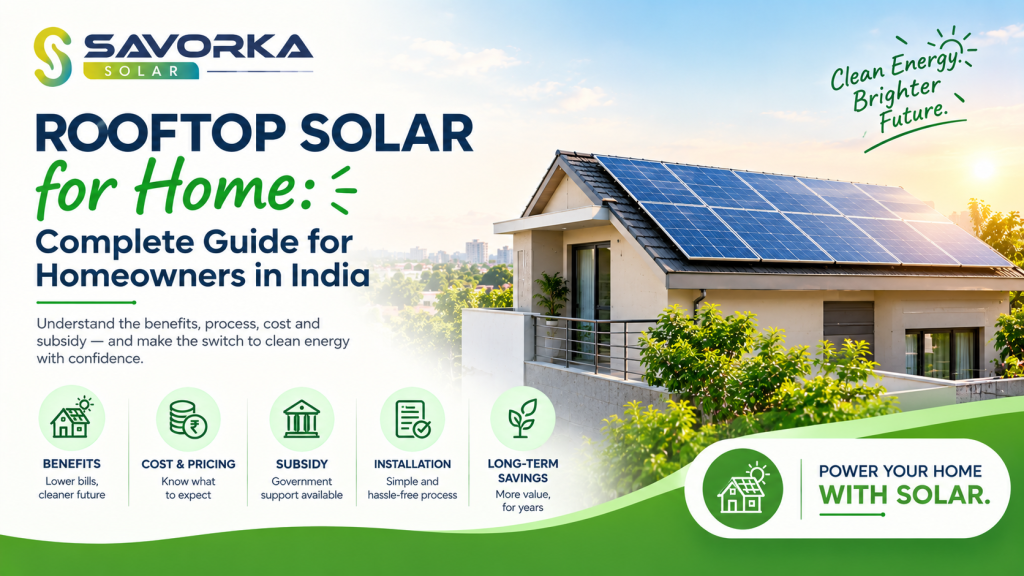
A rooftop solar system uses solar panels installed on a home’s roof to convert sunlight into electricity.
A typical rooftop solar system for home includes:
- Solar panels
- Inverter
- Mounting structure
- DC and AC cables
- Protection and safety equipment
- Electricity meter and related grid-connection components
During the day, the panels generate electricity that can be used by household appliances such as fans, lights, refrigerators, air conditioners and water pumps.
A grid-connected system can also interact with the electricity grid according to the applicable metering and settlement arrangements.
How Does a Solar Rooftop for Home Work?
Solar panels generate electricity when sunlight falls on them. The electricity generated by the panels is converted by the inverter into usable AC electricity for the home.
If the house is consuming electricity while the solar system is generating power, the generated electricity can be used directly.
If generation exceeds the home’s immediate consumption, surplus electricity may be exported to the grid through an approved net-metering or other applicable arrangement, depending on the state and DISCOM regulations.
At night, when the panels are not generating electricity, the home generally draws power from the grid unless a suitable battery-based system is installed.
What Size Rooftop Solar System Does Your Home Need?
The right system size depends mainly on your household’s electricity consumption, available roof area and budget.
Common residential options include:
- 1–2 kW: Suitable for homes with relatively low electricity consumption
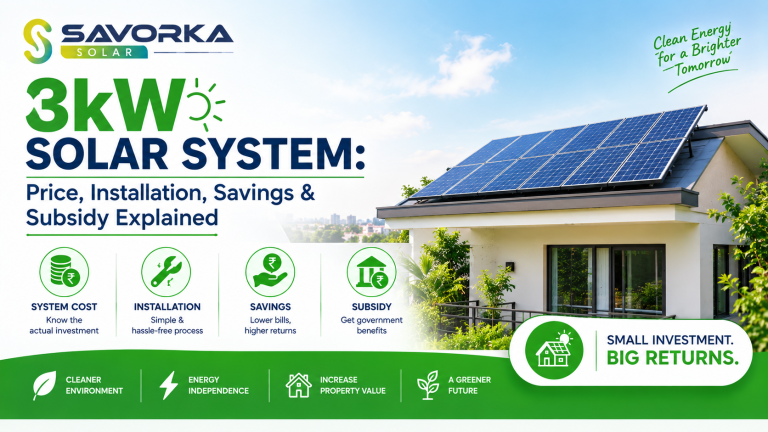
- 3 kW: A common choice for medium-consumption households
- 5 kW: Suitable for homes with higher electricity usage
- Above 5 kW: Considered for larger electricity requirements where the roof and regulations allow
It is better to determine system capacity from your electricity bills rather than selecting a system only because of the available subsidy.
A professional site assessment can also check whether sufficient shadow-free roof space is available.
What Does Rooftop Solar Cost?
The cost of rooftop solar panels for home varies depending on system capacity, panel and inverter brands, mounting structure, installation requirements and other project specifications.
A 3 kW system will generally cost less than a 5 kW system, while premium equipment or additional electrical and structural work can increase the overall project cost.
Instead of comparing only the price per kW, homeowners should compare the complete quotation, including equipment, installation, warranties, monitoring, metering assistance and after-sales service.
What Subsidy Is Available for Residential Solar?
Eligible residential consumers can receive Central Financial Assistance under the PM Surya Ghar: Muft Bijli Yojana.
The current central subsidy structure provides:
- 1 kW: ₹30,000
- 2 kW: ₹60,000
- 3 kW: ₹78,000
- Above 3 kW: Maximum ₹78,000
The actual subsidy received depends on eligibility and compliance with the applicable scheme requirements.
Homeowners should apply through the official PM Surya Ghar National Portal and check the latest guidelines before installation.
State-level incentives may also be available depending on where the property is located.
Rooftop Solar Installation Process
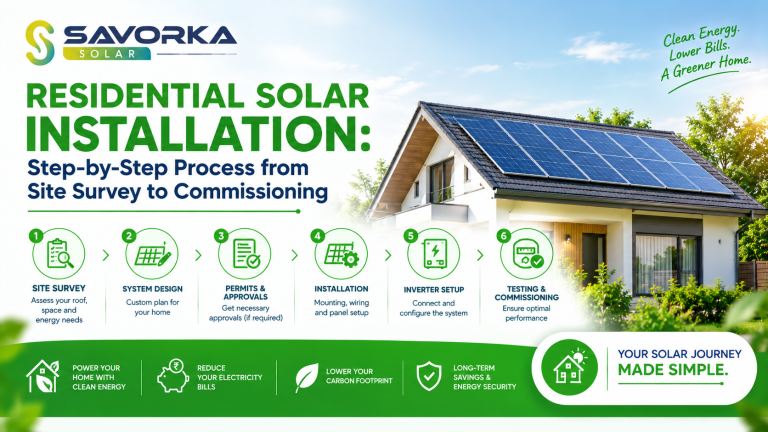
Installing a solar system generally involves several steps.
Site Assessment
The installer evaluates your roof area, shading, orientation, electrical connection and structural requirements.
System Design
Based on electricity consumption and site conditions, the appropriate system capacity and layout are determined.
Application and Approvals
For eligible grid-connected residential systems, the required application and DISCOM procedures are completed through the applicable process.
Installation
Solar panels, mounting structures, inverter and electrical protection equipment are installed.
Inspection and Metering
The relevant DISCOM completes the required inspection and grid-connection formalities.
Commissioning
Once the system is approved and commissioned, it can begin generating electricity for the home.
Benefits of Rooftop Solar for Homeowners
The main advantage of rooftop solar for home is the ability to generate electricity at your own property.
Depending on the system and household consumption, homeowners can benefit from:
- Lower dependence on grid electricity
- Potentially lower electricity bills
- Better use of unused rooftop space
- Reduced exposure to future electricity tariff increases
- Increased use of renewable energy
The actual savings depend on electricity consumption, system capacity, solar generation, tariffs and applicable metering arrangements.
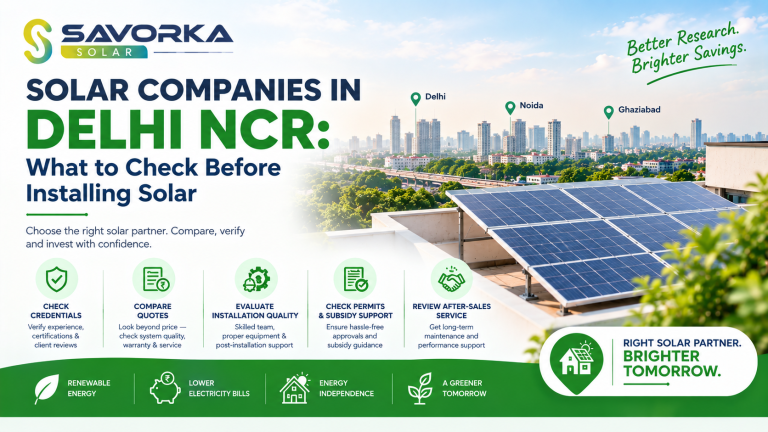
What Should You Check Before Installation?
Choosing the right installer is important because a solar system is a long-term investment.
Before selecting a solar company, compare:
- Panel and inverter specifications
- Mounting structure quality
- Product warranties
- Installation workmanship
- Expected generation
- Metering assistance
- After-sales support
- Complete project cost
Do not select a system based solely on the lowest quotation.
Why Choose Savorka Solar?
Savorka Solar provides residential solar solutions designed around the electricity requirements and rooftop conditions of each home.
From site assessment and system design to solar panel installation, the focus is on creating a practical rooftop solar solution for long-term use.
If you are considering a solar rooftop for home and want to understand the suitable system size, installation process and subsidy options, Savorka Solar can help you evaluate your requirements.
Explore Savorka Solar’s residential solar solutions to learn more.
Final Thoughts
A properly designed rooftop solar system for home can help homeowners generate their own electricity and reduce dependence on conventional grid power.
The right system is not necessarily the biggest one. It should match your electricity consumption, available roof space, budget and local regulations.
Before investing, compare the complete system, installation quality, warranties and after-sales support along with the expected savings.
Thinking about rooftop solar for your home? Get in touch with Savorka Solar for a professional assessment and a solution designed around your home’s energy requirements.
Frequently Asked Questions
1. Is rooftop solar suitable for every home?
Not necessarily. Roof size, shading, structural condition, orientation and electricity consumption should be evaluated before installation.
2. How many solar panels does a home need?
It depends on the system capacity and the wattage of the selected panels. A professional installer can determine the required number based on your electricity needs and available roof space.
3. Can rooftop solar eliminate my electricity bill completely?
It may significantly reduce electricity purchases, but the actual result depends on system size, household consumption, solar generation, tariffs and applicable grid-metering arrangements.
4. Is subsidy available for rooftop solar in India?
Eligible residential consumers can receive subsidies under PM Surya Ghar: Muft Bijli Yojana, subject to the applicable government guidelines and requirements.