
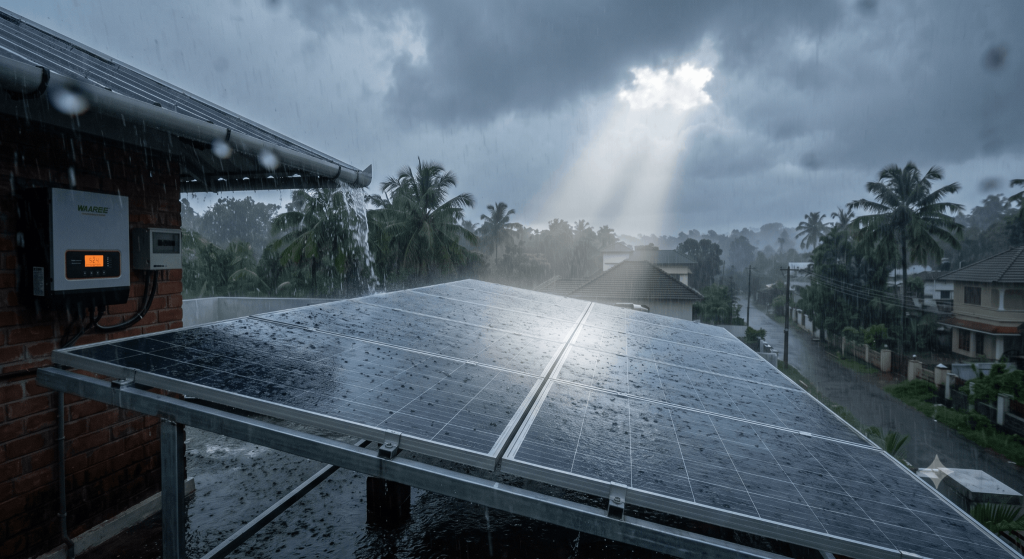


The simple answer is Yes. Solar panels continue generating electricity even on cloudy and rainy days. While power production may decrease compared to bright summer days, modern solar technology is designed to perform efficiently throughout the year, making solar a smart long-term investment.
If you’re planning solar panel installation for your home or business, understanding how solar performs during the rainy season can help you make an informed decision. Whether you’re looking for a trusted solar company in Noida, a reliable solar company in Ghaziabad, or one of the leading solar companies in Delhi NCR, this guide explains everything you need to know.
How Do Solar Panels Generate Electricity?
Solar panels work by converting sunlight into electricity using photovoltaic (PV) cells. Contrary to popular belief, solar panels don’t require extreme heat, they require daylight.
Even when the sky is cloudy, sunlight still reaches the Earth’s surface in the form of diffuse radiation. Modern solar panels are capable of capturing this light and generating electricity.
During monsoon:
- Direct sunlight decreases.
- Diffuse sunlight increases.
- Panels continue producing electricity at reduced output.
- Rain naturally cleans the panel surface, improving efficiency afterward.
This means your system continues working throughout the rainy season rather than stopping completely.
Do Solar Panels Work on Cloudy Days?
Absolutely.
Cloud cover reduces sunlight intensity, which temporarily lowers electricity production. Depending on cloud density and weather conditions, solar panels generally produce 10% to 40% of their normal peak output, and sometimes more during brighter cloudy conditions.
Several factors influence production:
- Cloud thickness
- Time of day
- Panel orientation
- Panel technology
- System design
- Geographic location
This is why choosing experienced solar EPC companies is important. A professionally engineered system ensures maximum annual generation not just peak summer performance.
Does Rain Damage Solar Panels?
No.
Quality solar panels are specifically designed to withstand harsh weather conditions including:
- Heavy rainfall
- Strong winds
- Dust storms
- High humidity
- Temperature fluctuations
- Hail (within certified limits)
Professional solar panel installation services include waterproof mounting structures, corrosion-resistant hardware, and weatherproof electrical components to ensure safe operation during every season.
Rain Can Actually Improve Solar Panel Performance
Many homeowners are surprised to learn that rain offers several benefits.
Natural Cleaning
Dust, bird droppings, pollution, and dirt reduce solar efficiency over time.
Rainwater naturally washes away these deposits, allowing more sunlight to reach the photovoltaic cells once the weather clears.
Cooler Operating Temperatures
Solar panels perform more efficiently at lower temperatures.
Although sunlight is reduced during monsoon, the cooler weather helps improve panel efficiency compared to extremely hot summer afternoons.
Will My Electricity Savings Reduce During Monsoon?
Solar generation follows seasonal patterns.
Typical annual production:
- Summer: Highest generation
- Winter: Moderate generation
- Monsoon: Lower generation due to reduced sunlight
However, solar systems are designed based on annual energy production, not just one season.
The high electricity generated during sunny months helps compensate for lower production during rainy months.
Over an entire year, homeowners continue to enjoy substantial savings on electricity bills.
Are Rooftop Solar Panels for Home Worth It in India?
Definitely.
India receives approximately 250–300 sunny days annually, making it one of the world’s best countries for solar power generation.
Even during the monsoon, annual energy production remains highly attractive, especially when combined with:
- Long system lifespan
- Low maintenance
- Lower electricity bills
- Clean renewable energy
- Excellent annual solar irradiation across India
Installing rooftop solar panels for homes is still one of the smartest long-term investments for homeowners.
How to Maximize Solar Panel Performance During the Monsoon
While solar panels naturally produce less electricity during periods of heavy cloud cover, there are several ways to ensure your system continues to perform efficiently throughout the rainy season.
Keep Your Solar Panels Clean
Monsoon rain often helps wash away dust, pollen, and other debris that accumulate during the summer months. However, leaves, bird droppings, or mud may still collect on the panels and reduce their efficiency. Periodic inspections and cleaning, when required, can help maintain optimal performance.
Avoid Shading Around the Panels
Trees and vegetation tend to grow rapidly during the monsoon. Overhanging branches or newly formed foliage can cast shadows on your solar panels, reducing energy generation. Trimming nearby trees helps maximize sunlight exposure.
Ensure Proper Drainage
A professionally installed solar system includes the correct tilt angle and mounting structure to allow rainwater to drain off easily. This prevents water from pooling on the panels and minimizes the buildup of dirt and debris.
Monitor Your System Regularly
Most modern solar systems include monitoring apps that allow homeowners to track electricity generation in real time. Monitoring your system during the monsoon helps identify any unexpected drops in performance that may require inspection or maintenance.
Choose High-Quality Components
Not all solar panels perform equally under low-light conditions. Premium solar modules are designed to capture diffuse sunlight more efficiently, ensuring better energy generation even during cloudy weather. Choosing quality components from a trusted installer can improve year-round performance.
Why Professional Installation Makes a Difference
A solar system’s performance during the monsoon depends not only on the weather but also on how well it has been designed and installed.
A professional solar panel installation ensures:
- Panels are installed at the correct tilt angle to maximize year-round sunlight exposure.
- Durable mounting structures withstand heavy rainfall and strong winds.
- Waterproof electrical connections enhance safety and reliability.
- Proper spacing minimizes shading and improves overall energy generation.
At Savorka Solar, we specialize in residential and commercial solar panel installation across Noida, Ghaziabad, and Delhi NCR. Our experienced engineers design every system to deliver consistent performance in every season, including the monsoon, using premium-quality components and industry best practices.
Final Thoughts
The monsoon season may temporarily reduce solar energy production, but it does not stop solar panels from generating electricity. Modern photovoltaic technology is designed to utilize both direct and diffused sunlight, allowing systems to continue producing clean energy even on cloudy and rainy days.
When evaluated over an entire year, India’s abundant sunshine ensures that rooftop solar remains one of the most cost-effective and sustainable energy solutions for homeowners. With proper system design, professional installation, and regular maintenance, your solar panels will continue delivering reliable performance long after the monsoon has passed.
Whether you’re looking for a trusted solar company in Noida, a reliable solar company in Ghaziabad, or one of the leading solar companies in Delhi NCR, Savorka Solar provides end-to-end solar solutions tailored to your energy needs. From consultation and system design to installation and after-sales support, our experts are committed to helping you maximize your energy savings in every season.
Ready to Go Solar?
If you’re planning to install rooftop solar panels for home or looking for reliable solar panel installation services, our team is here to help. Contact Savorka Solar today for a free site assessment and personalized consultation. We’ll help you choose the right solar solution that delivers efficient, reliable performance throughout the year rain or shine.
Frequently Asked Questions
Do solar panels stop working when it rains?
No. Solar panels continue producing electricity during rainfall, although output is lower because less sunlight reaches the panels.
How much electricity do solar panels generate during monsoon?
Production varies depending on weather conditions but typically ranges between 10% and 40% of peak generation during heavily overcast days.
Does rain clean solar panels?
Yes. Rain naturally removes dust and debris, helping restore panel efficiency once clear skies return.
Is monsoon a good time to install solar panels?
Yes. Installation can be carried out safely during suitable weather conditions, allowing your system to be ready before the return of stronger sunlight.