
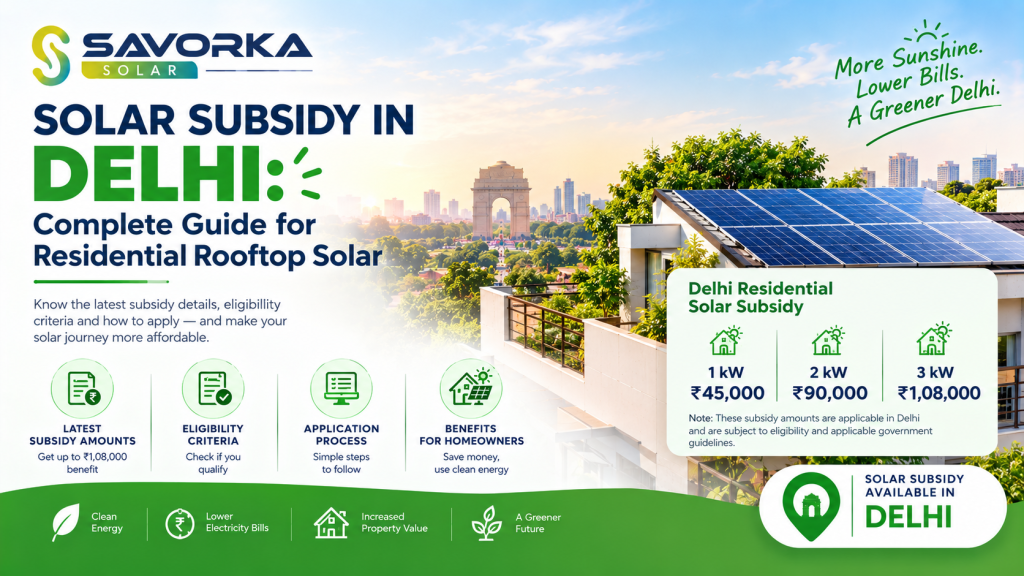
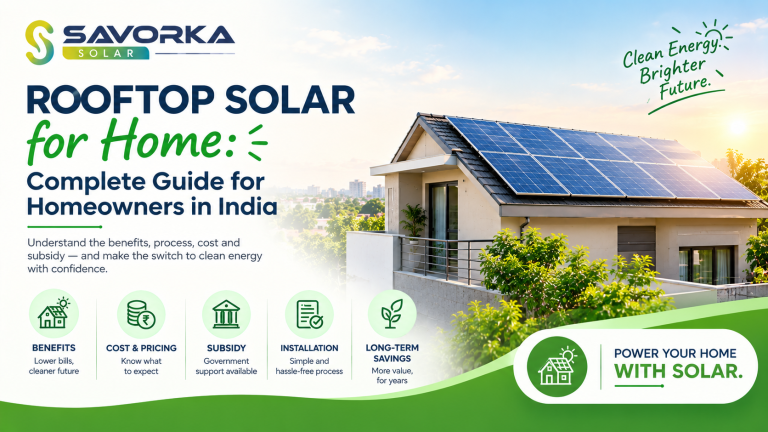
The solar subsidy in Delhi is primarily available to eligible residential consumers through the PM Surya Ghar: Muft Bijli Yojana, the central government’s rooftop solar programme. However, subsidy is not simply a discount on the panel price. Homeowners need to follow the prescribed application, installation and verification process.
Here is what Delhi homeowners should know before installing a residential rooftop solar system.
What Is the Solar Subsidy in Delhi?
The solar panel subsidy in Delhi refers mainly to Central Financial Assistance (CFA) available to eligible residential consumers installing grid-connected rooftop solar under PM Surya Ghar Yojana.
The central subsidy is linked to the capacity of the rooftop solar system:
| Solar System Capacity | Central Subsidy |
|---|---|
| 1 kW | ₹30,000 |
| 2 kW | ₹60,000 |
| 3 kW | ₹78,000 |
| Above 3 kW | Maximum ₹78,000 |
The subsidy is subject to the applicable government guidelines, eligibility conditions and installation requirements.
For the latest scheme information and application process, homeowners should use the official PM Surya Ghar National Portal.
Who Can Get Solar Subsidy in Delhi?
The scheme is intended for residential electricity consumers who install eligible rooftop solar systems through the applicable government process.
Before applying, homeowners should consider:
- Whether the electricity connection is eligible
- Whether the property has a suitable rooftop
- Whether the proposed system capacity matches household requirements
- Whether the installation meets applicable technical requirements
- Whether the installation and documentation follow the prescribed process
The subsidy should not be treated as an automatic benefit for every solar installation. Eligibility and approval requirements must be satisfied.
How Much Solar Rooftop Subsidy in Delhi Can You Receive?
For a residential consumer, the maximum central subsidy available for a system of 3kW or higher is ₹78,000.
For example, an eligible homeowner installing a 3kW rooftop solar system may receive up to ₹78,000 in central financial assistance.
However, the final benefit depends on the applicable scheme provisions and successful completion of the required process. Homeowners should check the latest information on the official portal rather than relying on older subsidy figures shared online.
It is also important to distinguish between system price and subsidy. The subsidy reduces the eligible cost burden; it does not mean that the entire solar installation is provided free of charge.
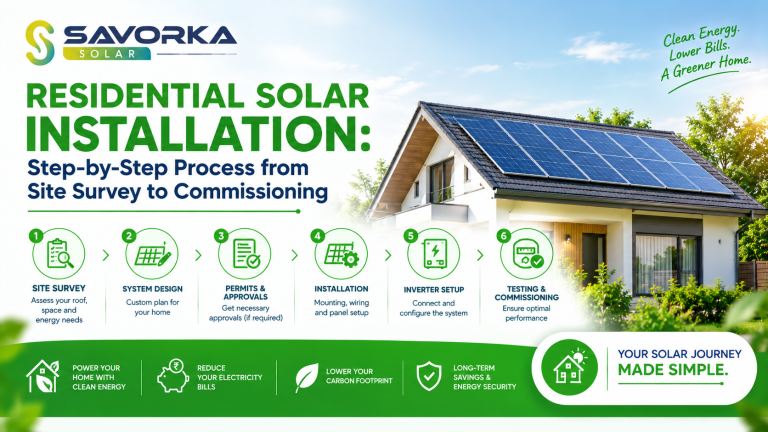
How to Apply for Solar Subsidy in Delhi
The application process is primarily handled through the national rooftop solar portal.
Step 1: Register on the Portal
Start by registering your residential electricity connection on the PM Surya Ghar portal using the required details.
Step 2: Submit the Application
Provide the required electricity connection and consumer information and apply for rooftop solar installation.
Step 3: Select an Eligible Vendor
Once the application progresses according to the applicable process, the homeowner can proceed with an eligible vendor for system installation.
Step 4: Install the Solar System
The selected vendor conducts the necessary site assessment and installs the rooftop solar system according to the approved requirements.
Step 5: Inspection and Verification
After installation, the required inspection, documentation and verification are completed through the applicable DISCOM/portal process.
Step 6: Subsidy Processing
Once the installation meets the required conditions and the process is successfully completed, the eligible subsidy is processed according to the scheme guidelines.
What Documents Are Generally Required?
Exact documentation can depend on the application and verification process, but homeowners should generally keep relevant information such as:
- Electricity bill or consumer details
- Identity and applicant information
- Bank account details for subsidy processing
- Property/installation-related information where required
- Installation and system documentation
The details submitted should match the electricity connection and applicant information to avoid unnecessary delays.
Does Solar Subsidy Cover the Entire Installation Cost?
No. The solar panel subsidy in Delhi is financial assistance towards an eligible rooftop solar installation. Homeowners still need to consider the remaining system cost.
The total investment can depend on:
- Solar panel technology
- Inverter selection
- Mounting structure
- Roof configuration
- Electrical work
- Installation requirements
- System capacity
- Additional site-specific work
Therefore, compare the post-subsidy cost of the complete system, rather than looking only at the subsidy amount.
What About Net Metering in Delhi?
Residential rooftop solar connected to the electricity grid can work with a suitable metering arrangement, subject to the applicable Delhi DISCOM regulations.
With net metering, electricity generated by the solar system is used by the home first. Depending on the applicable arrangement and generation, surplus electricity can be exported to the grid and accounted for according to the relevant regulations.
This makes the relationship between solar generation, household consumption and electricity billing an important part of planning a rooftop system.
Homeowners should confirm the latest requirements with their respective DISCOM before installation.
Why Site Assessment Matters Before Applying
A subsidy does not make every rooftop suitable for solar.
Delhi homes can have different roof sizes, orientations and shading conditions. Nearby buildings, water tanks, trees and other structures can affect the usable installation area.
A professional site assessment helps determine:
- Available shadow-free roof area
- Suitable panel placement
- Approximate generation potential
- Appropriate system capacity
- Electrical requirements
- Mounting structure requirements
This can prevent homeowners from choosing a system size based solely on the maximum available subsidy.
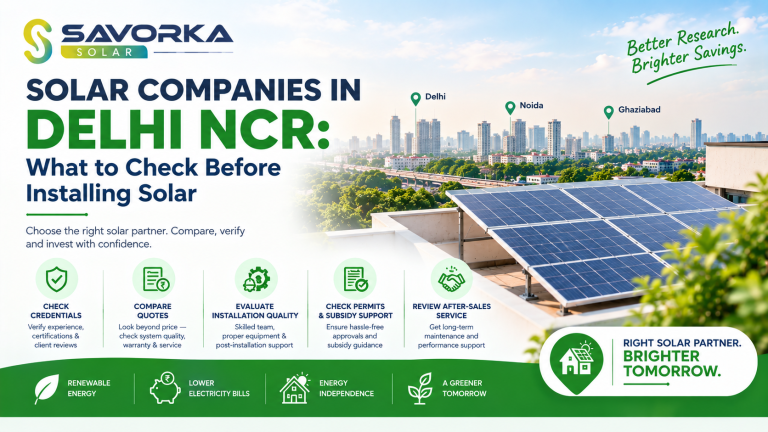
Choosing a Solar Company in Delhi
The installer you choose can affect the quality and long-term performance of your rooftop solar system.
Before finalising a company, check:
- Experience with residential rooftop projects
- Quality and specifications of panels and inverters
- Mounting structure quality
- Installation standards
- Warranty terms
- After-sales service
- Assistance with the applicable subsidy and DISCOM process
Savorka Solar provides residential solar solutions designed around the customer’s electricity requirements and rooftop conditions. You can explore its residential solar services.
For official programme information, also refer to the MNRE Grid-Connected Rooftop Solar Programme.
Plan Your Delhi Rooftop Solar Installation
The solar subsidy in Delhi can make residential rooftop solar more affordable, but understanding the process is just as important as knowing the subsidy amount.
Before investing, evaluate your electricity consumption, rooftop conditions, expected generation, complete installation cost and applicable subsidy. Most importantly, use the official PM Surya Ghar process and verify the latest guidelines before proceeding.
With the right system design and professional installation, rooftop solar can become a long-term way for Delhi households to reduce their dependence on conventional grid electricity.