
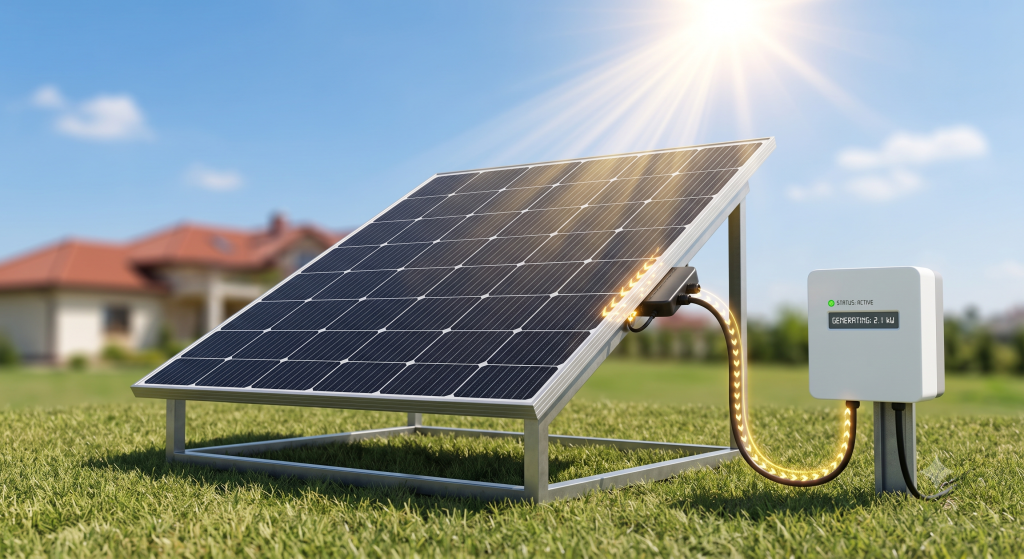


The simple answer is that your extra solar power doesn’t go to waste. If your system is connected to the electricity grid through net metering, the excess electricity is exported to the grid and adjusted against the electricity you consume later. This allows you to make the most of every unit of solar energy your system generates.
Why Do Solar Panels Generate Excess Electricity?
Solar panels produce the most electricity during peak daylight hours, usually between 10 AM and 3 PM. During this time, many households consume less electricity because family members are at work or school.
As a result, your solar system may generate more electricity than your home needs. Instead of wasting this surplus energy, a grid-connected solar system sends it back to the utility grid.
This process improves the overall efficiency and financial value of your rooftop solar system.
How Does Net Metering Work?
Net metering is a billing system that allows homeowners to receive credit for the excess electricity generated by their rooftop solar system.
Here’s how it works:
- Your home uses solar electricity first.
- Any surplus electricity is automatically exported to the grid.
- A bidirectional (net) meter records both imported and exported electricity.
- At the end of the billing cycle, your electricity bill is calculated based on the net units consumed.
This means the electricity you export during the day helps offset the electricity you use at night or during periods when your solar panels aren’t generating power.
Does Excess Solar Energy Reduce Your Electricity Bill?
Yes. Net metering allows homeowners to maximize the financial benefits of rooftop solar.
For example, if your solar system exports extra electricity during sunny afternoons, those units can be adjusted against your future electricity consumption, depending on your local DISCOM’s net metering policy.
This is one of the key reasons why many homeowners choose rooftop solar panels for home; they not only generate clean energy but also help reduce monthly electricity expenses over the long term.
What Happens During a Power Cut?
A common misconception is that rooftop solar panels continue supplying electricity during a power outage.
In reality, a standard grid-connected solar system automatically switches off when the grid goes down. This is an important safety feature that protects utility workers carrying out repairs on power lines.
If backup power is important for your home, you can consider a hybrid solar system with battery storage, which can supply electricity during outages.
How to Get the Most from Your Solar System
To maximize the benefits of your rooftop solar system:
- Use high-power appliances such as washing machines or water pumps during the daytime whenever possible.
- Keep your solar panels clean to maintain optimum performance.
- Monitor your system regularly through the inverter or monitoring app.
- Choose a professional solar panel installation company to ensure your system is designed for maximum efficiency.
A well-designed system will not only generate more electricity but also help you achieve greater savings throughout the year.
Final Thoughts
Producing more electricity than you use is actually a good thing. With net metering, your excess solar power is exported to the electricity grid and adjusted against your future consumption, helping lower your electricity bills and improving the overall value of your solar investment.
Understanding how net metering works allows homeowners to use rooftop solar more efficiently and enjoy long-term financial and environmental benefits.
Ready to Install Rooftop Solar?
At Savorka Solar, we help homeowners make the most of their investment with professionally designed rooftop solar solutions. Our experienced team provides end-to-end solar panel installation services, from site assessment and system design to installation and after-sales support.
Whether you’re looking for a trusted solar company in Noida, solar company in Ghaziabad, or one of the reliable solar companies in Delhi NCR, we’re committed to delivering high-quality solar solutions that maximize your energy savings.
If you’re planning to switch to solar, Savorka Solar can help you choose the right system for your home’s energy needs. Contact our team today for a free consultation and discover how rooftop solar can help you generate clean, reliable, and cost-effective electricity.